
Bring the Outside In: Biophilic Design & How to Use It at Home
By: Becka Simms, Associate IIDA – Interior Designer and Consultant
Biophilic design might sound like a buzzword, but it’s a powerful design approach that taps into something ancient and instinctual: our connection to nature. It’s a term that literally means “love of life,” and when used in interior design and architecture, biophilic principles help uplift, energize, and boost creativity. After all, we’re biological creatures ourselves! We need shelter, yes—but we weren’t meant to live in sterile, grey boxes.
What Is Biophilic Design?
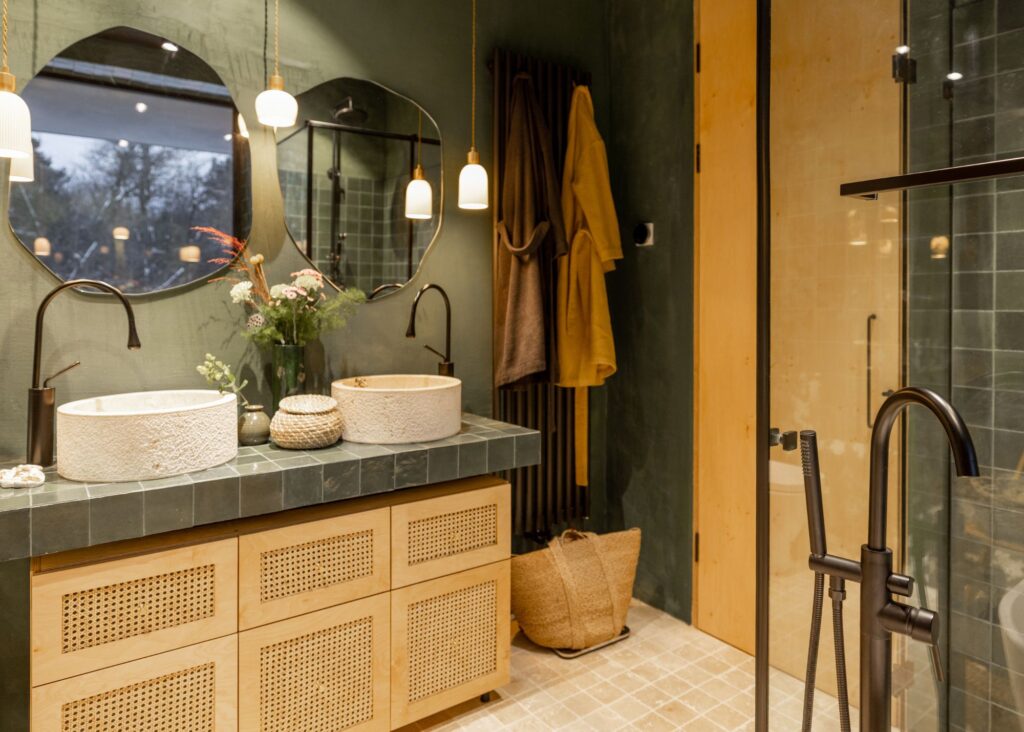
Before we get into the details, let’s start with the basics. Biophilic design is all about bringing elements of nature into the spaces where we live and work—think natural light, earthy textures, organic shapes, and materials like wood, stone, and greenery. It’s based on something we all intuitively feel: life feels better when we’re connected to the natural world!
This design approach isn’t just about style, it supports wellness, too. When done thoughtfully, biophilic design can help us feel more grounded, more at ease, and more inspired in our everyday environments.
So how do you bring that feeling into your own home? Let’s take a look!
Why It Matters: The Benefits of Biophilic Design
Here’s a stat that’s stuck with me ever since I first learned of biophilic design while earning my degree in interior design: We spend over 90% of our time indoors. That number blew my mind when I first heard it, and honestly, it still does. And if you live in Wisconsin like I do, you know that during our cold snaps or those humid days (when my hair expands to twice its size!), that number might be even higher!
That’s why bringing the outdoors in isn’t just about creating a pretty space, it’s about designing for wellness.
According to the U.S. Environmental Protection Agency, Americans spend around 90% of their time indoors, highlighting the importance of designing spaces that support our health, mood, and overall well-being. (Source: EPA)
Biophilic design has been shown to:
- Reduce stress
- Improve focus and creativity
- Support emotional regulation
- Promote healing and relaxation
- Increase overall life satisfaction
It’s no wonder this approach is used in:
- Healthcare environments to help patients recover more comfortably
- Schools and learning spaces to boost student performance and focus
- Healing and wellness centers for a calming, nurturing feel
- Workplaces and collaborative spaces to promote energy and clarity
- Community developments and homes to support joyful living
Once I discovered this concept, it was a no-brainer! And it’s something I implement in even the smallest design decisions in both my professional and personal life. At its core, the best design is human-centered. It’s about creating spaces that not only meet our everyday needs but also uplift and inspire everyone who experiences them.
Biophilic Design Is More Than Just Adding Plants
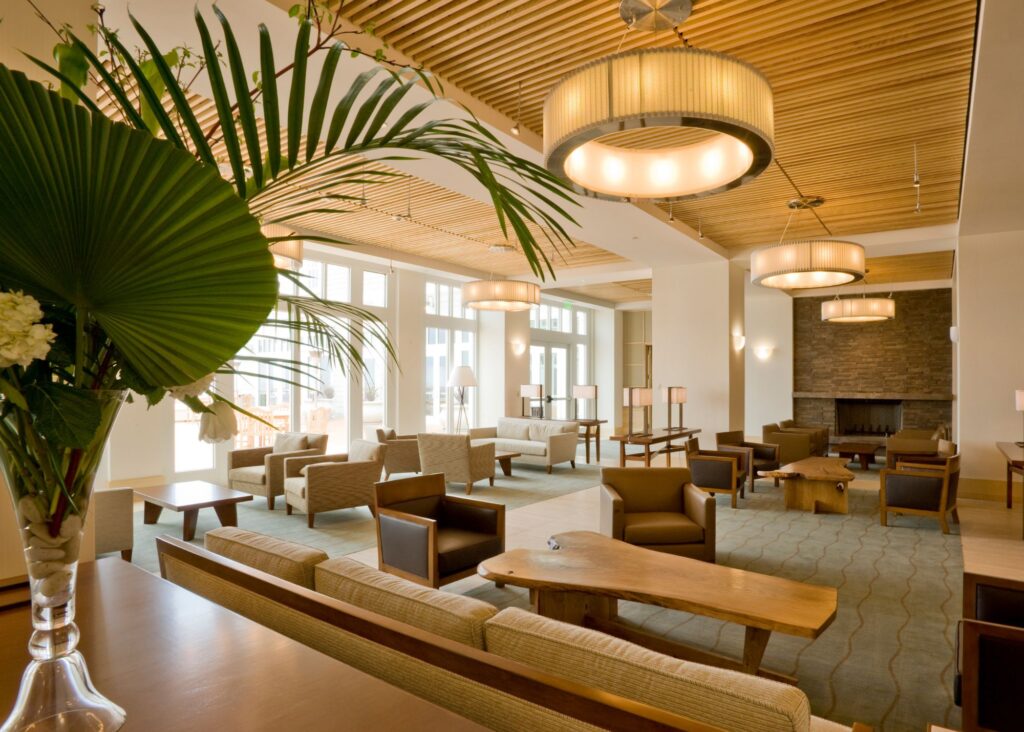
When people hear “biophilic design,” they often think plants—and lots of them. And while greenery is a fantastic (and easy) place to start, biophilic design is so much more than that. It’s about creating spaces that connect us to the natural world—visually, physically, and emotionally.
And if you’re like me and have a cat who doesn’t get along with most houseplants, faux plants have come a long way in both look and quality! When styled well, they can still provide that visual connection to nature without the risk to your furry friends.
Let’s look at some simple, impactful ways to bring biophilic design into your home using what you already have (and love)!
Principles of Biophilic Design with Real-World Inspiration
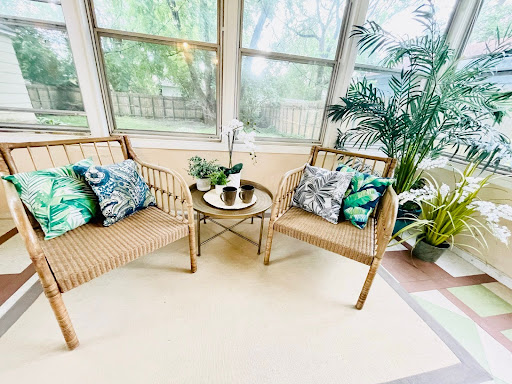 🌴 Create a Nature Nook with Natural Light
This cozy corner featuring two rattan chairs and lush greenery is a perfect example of how to carve out a calming retreat at home. Natural materials, like woven rattan, combined with filtered daylight, create a space that feels grounded and rejuvenating. A few well-placed plants (real or faux!) complete the effect. Even the patterns on the pillow echo this concept, which is another avenue to introduce biophilia to your space!
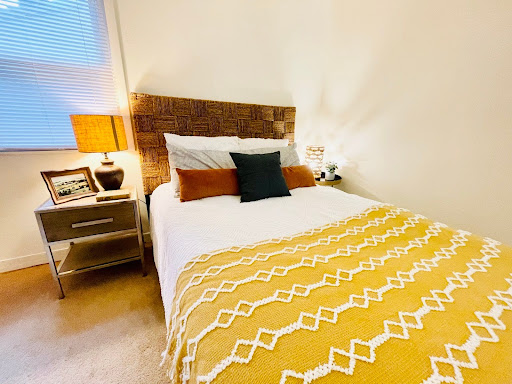 🛏️ Layer Soft Textures & Warm, Natural Materials
In the bedroom, the combination of a woven natural fiber headboard and cloud-soft bedding instantly adds warmth and comfort. Textiles like cotton, linen, or wool echo the organic textures found in nature and make your space feel more inviting without overcomplicating the palette.
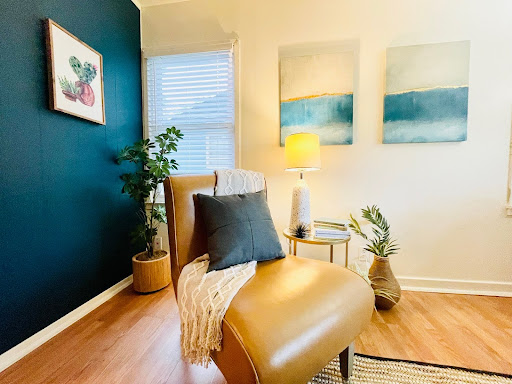 🪑 Balance Earthy Blue and Green Tones with Organic Accents
The leather chair in a corner nook is more than just a seat, it’s a tactile connection to nature. Paired with rich blues reminiscent of water and sky, it creates a calming contrast that makes the whole space feel balanced and serene.
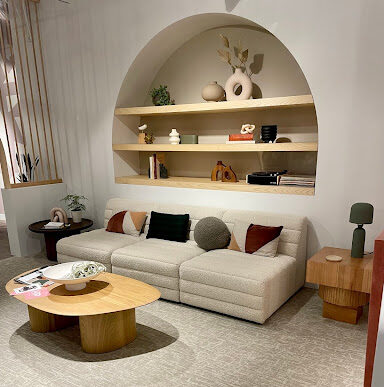 🌳 Use Organic Shapes and Materials in Furniture & Interior Architecture
The rounded sofa placed in front of the soft, curved wall niche is a great reminder: nature doesn’t follow straight lines. When you bring curves into your furniture and even your architecture, it adds softness and ease that our brains instinctively respond to. This combo is subtle, modern, and timeless. Different species of wood are used throughout this space in side tables, shelves, and a subtle room divider which allows natural light to spill into the space.
 🌞 Let in Soft, Natural Light with Sheer Textiles
That curved sofa with sheer curtains behind it is a biophilic win! The light filters in gently, keeping your circadian rhythm happy, while the rug beneath—featuring curved, organic patterns—creates a visual echo of the natural world.
 🎨 Furnish with Planters and Earth-Toned Pieces
In several of these examples, furniture and planters become one. Maybe not something you’d find in a home, but it can definitely ignite the inspiration you’re looking for! These sculptural benches incorporate planters right into their organic-shaped form, all in earthy, calming tones. It’s functional art that also supports wellness—win-win!
 ⛰ Incorporate Stone and Textural Surfaces
In the sunny, communal space inside The Merchandise Mart in Chicago, planters are built into seating and natural stone finishes are everywhere you look. It’s a clear message: we can make large-scale, high-use environments feel warm and restorative by using honest, hard-working materials that come straight from the earth.
 🪑 Celebrate Classic, Curved Craftsmanship
And then there’s the wishbone chair. This iconic piece proves that biophilic design doesn’t need to be trendy or complicated. Its soft curves and leather seat celebrate traditional materials and skilled craftsmanship—an easy way to bring a human-centered, natural touch into any room.
Design for Well-Being, One Detail at a Time
Biophilic design isn’t about turning your home into a jungle (unless that’s your thing—go for it!). It’s about reconnecting with the natural world in a way that fits your lifestyle, your personality, and your needs. These elements can uplift your space and your spirit.
And remember: You don’t need to do it all at once. Start with one corner. One plant. One swap to a natural material. Let it grow! Just like the life it brings into your space.
I hope I’ve been able to inform, inspire, and help you begin creating a wellness-boosting space of your own—one that not only looks beautiful but feels good to be in.
Author: Becka Simms, Associate IIDA Becka Simms is an interior designer and consultant with roots in the service industry, where she developed a deep appreciation for people, atmosphere, and how spaces make us feel. Today, she brings that same energy to her design work—focusing on comfort, wellness, and natural beauty. During the week, she works in commercial interiors, and on weekends, you’ll find her at The Cozy Home, helping customers discover pieces that bring their spaces to life.